Iteration with purpose
Describe a scene’s place, era, expected movement and purpose; review the material, then revise what does not serve the story.
Behind the stories
A workbench for making films with care.
Lens is an internal filmmaking workbench used in selected LUX143 Studio productions. It helps us turn research, personal ideas and sometimes conversations into visual stories, carrying a narrative from planning through images, sound, editing and review. People direct the work and make the editorial decisions; AI helps produce material for the film.
Making a film by hand meant moving repeatedly between research notes, scripts, visual references, generated material, audio and an edit. Ready-made AI video tools could produce a clip, but offered too little control over a continuing story. We needed a place to compare choices, revise a scene and remember why a particular version was selected.
Lens connects research, scripting and storyboarding with image and video work, audio, editing and quality review. We can keep narrative, character and visual references close to the scenes they inform, compare possible takes, and check the result before choosing what belongs in the film.
That matters especially for historical films. Documented events and places guide the work; imagined movement, dialogue, voices and reconstructed scenes remain creative interpretation. Lens helps us retain that distinction through production.
The difference
A generated clip is one possible ingredient. A film also needs a story that holds together across scenes, with each shot serving what comes before and after it.
Describe a scene’s place, era, expected movement and purpose; review the material, then revise what does not serve the story.
Use character and visual references to keep places, people and the sequence of events coherent across scenes.
Keep sources and editorial choices available for review, distinguishing documented history from artistic reconstruction.
Consider the cost of a proposed generation before choosing whether it serves the film.
In the films
Stories may begin with historical research, a personal idea or a conversation. Each has its own creative voice. Lens supports the process; it does not author the film.

Featured story
This seven-minute film follows the development of coloured maritime night signals through research and dramatic reconstruction. Its longer narrative asked us to keep characters, places and visual choices coherent across scenes.

Companion music film
A companion music film by Liya Bellmaris carries those themes into a distinct contemporary interpretation.
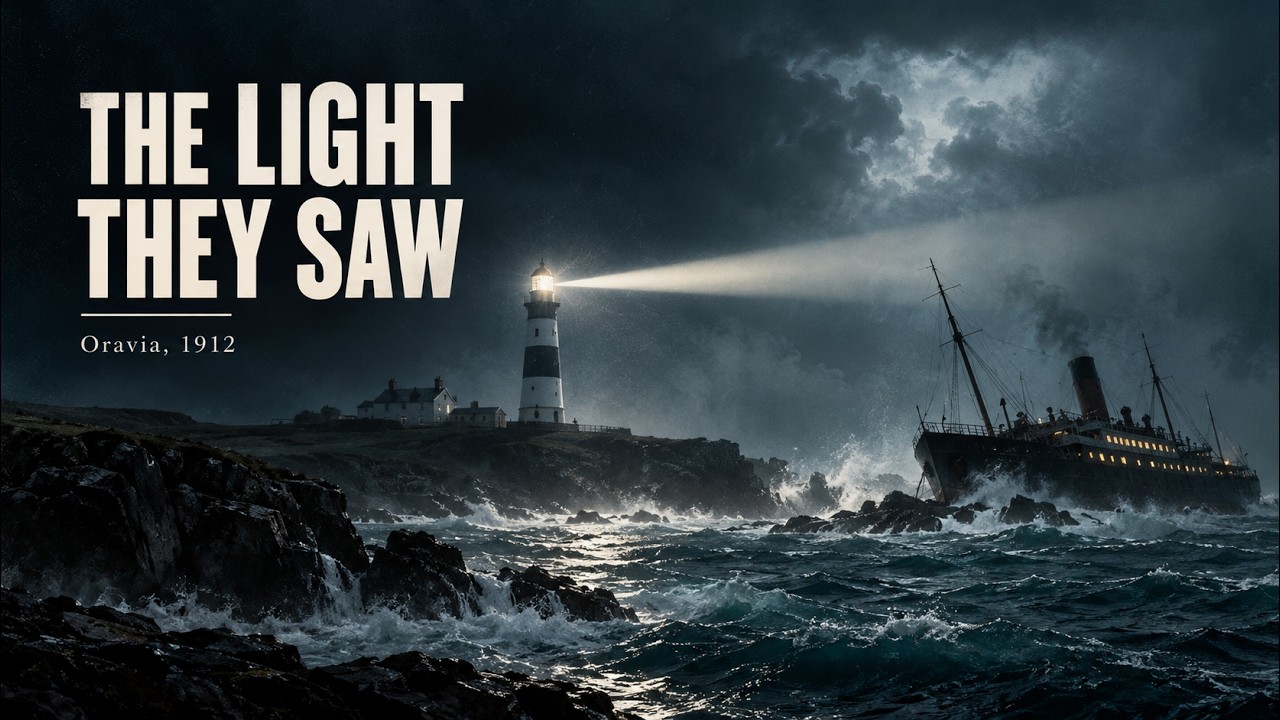
A researched maritime reconstruction. Lens helped bring the script, visual choices, sound and review into one film workflow.

A historical story shaped as a film, with reconstructed scenes and voices clearly separate from the record.

A pencil-style story drawn from historical accounts, with artistic reconstruction.

A film based on two historical views of Orléans, preserving their compositions while imagining movement.
Our work does not necessarily end when a film is published. In a separate viewer-loop process, we study how audiences discover and experience our stories, using viewing patterns and feedback to inform future editorial decisions.
These observations are not instructions to optimise every scene for attention. A quiet moment may be essential to the story, even when viewers leave.
In filmmaking, a lens shapes what we see and where we look. The name also belongs to the wider LUX143 language of light, optics, navigation and orientation. Lens helps us find a clear view of a story; the human filmmaker still chooses where to point it.
Lens is part of the Studio’s internal creative practice. LUX143 Studio publishes the work; LUX Light Ark pursues heritage research; and Liya Bellmaris is a distinct creative identity.